Pilate, a man who would otherwise have been forgotten comprehensively by history, left us one resonant phrase: ‘What is truth?’
There is much emphasis today on ‘truth-telling’ in relation to aboriginal history. And certainly, any history that is actually history is truth-telling. It is based first and foremost on verifiable facts, citing sources and quoting them frankly and fully. It incorporates opposing viewpoints and inconvenient truths. It makes clear distinctions between historical fact and interpretation, and interpretation and speculation. A historian may speculate, but they make it plain that that is what they are doing.
Some of the opposition to Bruce Pascoe’s book has been bedevilled by generalised rants against supposedly ‘left-wing’ commentators and agendas. This simply clouds the issue. While it might be true that generally, those advocating for Reconciliation, an aboriginal Voice to Parliament, etc, are on the left politically, there is nothing particularly left-wing about Pascoe’s book, or right-wing about opposition to it, despite right-wing journals such as Quadrant excoriating it.
The politics of right and left have no bearing on the recent repudiation of Dark Emu’s agenda by two academics, anthropologist Peter Sutton and archaeologist Keryn Walshe, who are highly experienced and qualified in aboriginal history and culture. They work through the book and Pascoe’s theory in detail and systematically, showing over and over again that his proposition is not supported by the evidence, which in fact contradicts it. The theory that the aboriginal peoples pre-settlement were nomadic hunter-gatherers is not, in fact, some random idea generated by white oppressors: it is the conclusion arrived at by examining the data.
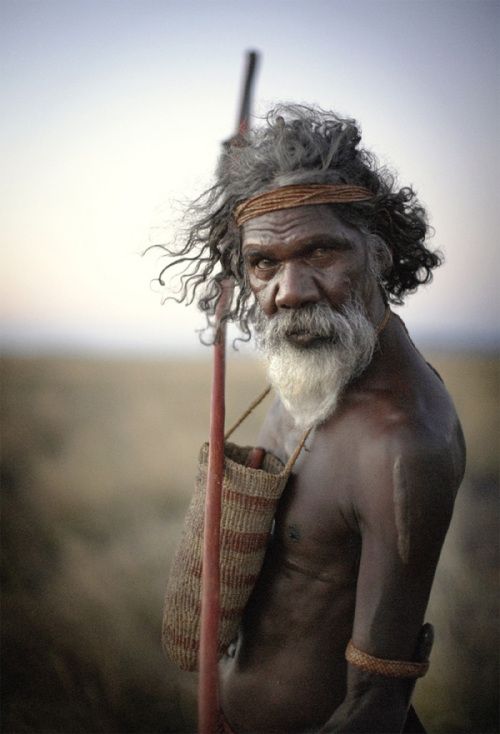
Dark Emu set out to show that, far from being nomadic hunter-gatherers, indigenous Australians pre-settlement were sophisticated farmers who built stone houses, lived in permanent settlements and farmed the land and rivers. This theory is seen by Pascoe to raise the status of the aboriginal peoples in some way. One of the most problematic aspects of this is that Pascoe applies what he conceives to be European values to aboriginal culture in order to validate it. This seems totally contradictory to any project of validating aboriginal culture in its own terms. To exacerbate this, he uses as sources the accounts of European settlers and explorers, not of the aboriginal peoples themselves. Sutton and Walshe point out that the most authentic accounts of aboriginal life pre-settlement are given by aboriginal elders living in remote communities, who remember traditional practices and continue them, even in adapted form. Sutton relies heavily on such sources; Pascoe ignores them.
When Pascoe’s book first emerged, one of the most puzzling questions was this: if the aboriginal peoples were sedentary farmers who built stone houses, planted and harvested crops and built fish and eel traps, why did they cease these traditional activities immediately Europeans arrived? After all, it was decades before Europeans fanned out into larger territories than the tiny enclaves they occupied on the coasts, encountered new tribes, and had any impact on their ways of life. As recently as a hundred years ago, even in the 1950s, there were still aboriginals in the remote areas, who had had very little contact with Europeans, living life the way their forebears had done. Why were they not building stone houses and harvesting crops?
Farmers or Hunter-Gatherers? is by no means the first attack on the veracity and reliability of Pascoe’s vision of pre-settlement life, but it is highly credible and comprehensive. Pascoe has said that he welcomes debate. But as Sutton, Walshe and others point out, there is in fact little room for debate. There are facts, and there are non-facts, history and non-history. Palatable to some agendas or not, non-history must not be allowed to replace, or be confused with, actual history. Dark Emu is not history. And its author knows it is non-history: ‘Pascoe is not some misguided amateur scholar, whose heart is in the right place and who can be forgiven, maybe, for a few transgressions or misinterpretations in the use of his sources. He is a serious and serial charlatan who has defrauded a generation. He is a propagandist whose narrative suits the extreme Aboriginal sovereignty agenda.’ (Peter O’Brien, author of Bitter Harvest)
O’Brien has his own axe to grind, but he is correct, if hyperbolic. The most alarming aspect of Dark Emu is the way it has been taken as gospel by a large number of people, to the extent of being taught in schools. This is seriously wrong. What is taught in schools should be serious, well-credentialled, factual history, even if it is replete with ideological inconvenience. Ideology must never be presented as fact. And what makes this worse is that many factual accounts are readily available as teaching resources, but have clearly been rejected in favour of a tome which produces a more likeable version of events.
It may be argued that aboriginal history and the impact of European settlement on indigenous culture is a fraught, emotive, political and highly-contested area. That is precisely why what is put forward, published and taught about it must be scrupulously factual and free from bias. Exactly the reason such accounts as Dark Emu have no place in schools, or serious discourse. It is non-history.
The path to Reconciliation is littered with non-facts and bias. That is perhaps inevitable to some extent. But they are not helping. ‘Truth-Telling’ is of critical importance. It is to be hoped that the proposed Commission will make a real difference. But to do so, realistically, it must tell the truth, the whole truth, and nothing but the truth. Among the issues it should beware of are:
- the myth of the ‘Noble Savage’, which permeates almost all discourse, whether coming from indigenous people themselves or from European Australians;
- the related myth of the pre-settlement idyllic, pastoral life of the indigenous peoples of Australia
- the myth of European settlement as a brutal military ‘invasion’, designed specifically to exterminate the indigenous peoples;
- the myth that James Cook was responsible for British settlement;
- the myth that if it had not been for Cook, the British government and the First Fleet, the aboriginal peoples would be continuing to enjoy undisputed possession of the continent;
- the myth of indigenous ‘sovereignty’ propagated by Pascoe and his ilk. ‘Sovereignty’ means exerting supreme control over a country or nation. There was no moment in aboriginal history when the hundreds of scattered, nomadic tribes, often at war with each other, exercised supreme control over the country. Individual groups may temporarily have exerted control over small areas of territory, but none of this could be described as sovereignty;
– because all these are, in fact, myths.
The Commission is an excellent opportunity to air and set straight the record on numerous like topics. If the truth is to be told, let it be told in full. And that should include an assessment of the extent to which European settlement has advantaged the aboriginal peoples, not simply catalogue the numerous and very real disadvantages they have experienced.
While post-settlement Australia has been responsible for many crimes and atrocities against the aboriginal peoples, it has also brought many advantages. To be fair and truthful these, too, should be thrown into the balance. While nothing can compensate the people for being obliged to share the land which was once entirely theirs alone, with unwanted incomers from elsewhere, if progress is ever to be made, it must be accepted that, desirable or not, and regardless of the actions of any one individual or government, their historic isolation could not continue into the modern era.
Indigenous culture pre-settlement and since is unique, fascinating and complex. It deserves serious attention and to be far better known and understood. Many scholars, such as Professor Sutton, have spent a lifetime exploring it. One of the barriers to such exploration is cultural embargoes or reluctance to share information with outsiders. This is understandable in cultural terms, but it is an impediment to better understanding of indigenous culture. It is to be hoped that more indigenous historians and scholars will be able to shed more light on some of these fields of study in the future.
It is clearly right that aboriginal people should have the greatest degree of autonomy possible in governing their own affairs, and that they should have a say in legislation that affects them. But in any country, there can only be one sovereign power, and that power in Australia is the Federal and State governments. Sovereign power cannot be shared. Any Voice to Parliament can only be advisory, or exercise power delegated to it by the Government. And to be effective in any way, it must be recognised and its authority accepted by all the aboriginal peoples of Australia. To date, no single committee or organisation has had that status in Australia. That has hindered Governments in their efforts to mitigate some of the appalling conditions aboriginal Australians have experienced and continue to suffer. The single most constructive act the aboriginal people could undertake to improve their conditions and power, would be to agree on such a universally accepted body to represent them. That will not be easy, but it is essential.
What activists like Pascoe have failed to grasp is that in the end, the reason the aborigines of Australia should have better treatment and greater autonomy is not because they previously had sovereignty over the land, or because they were done a great wrong in outsiders coming to live here, or because their culture was somehow idyllic or equal or superior to European culture, or because wrongs have been done to them. The reason is that they are people, and the long-time sole inhabitants of this land, and have a great and unique culture, which does not require special manipulation to validate.
Those reasons are enough. Fictional or mythic arguments are not required and are bound to fail. The aborigines are here; they have been here for millennia; they are human beings. The truth must be enough, and it is enough.
 Modern Life