The Census, Religion and Atheist Militancy: is religion really a bad thing?

Religion is in the news rarely and when it is, it’s usually in the form of bad news or attack. At present it’s the use of the Lord’s Prayer before beginning the day in Parliament and the religion question in the current census, which has called forth from some commentators a campaign to urge people not to tick the religion box if they’re not regular church attenders. The point of this is to reduce the amount of money the government allocates to religious bodies. Effectively, it’s part of an anti-religion campaign waged by some media, such as The Age (Melbourne), the Sydney Morning Herald, and the ABC. Keyboard warriors – militant atheists – have taken up the call with energy. However, this area is bedevilled with ignorance and wild assertions unsupported by data. This article is dedicated to injecting a factual assessment into the debate.

MYTH vs FACT

Myth #1:
Religion is on the decline and the number of atheists is rising. Religion is a minority interest.

Fact:
According to Pew Research, in 2010 the world population was 6,895,850,000. 16.4% were unaffiliated with any religion. So 83.6% of the world’s people are religious. Their projections suggest that the percentage of unaffiliated will have declined to 13.1% by 2050.

“The total number of religiously unaffiliated people (which includes atheists, agnostics and those who do not identify with any religion in particular) is expected to rise in absolute terms, from 1.17 billion in 2015 to 1.20 billion in 2060. But this growth is projected to occur at the same time that other religious groups – and the global population overall – are growing even faster. These projections, which take into account demographic factors such as fertility, age composition and life expectancy, forecast that people with no religion will make up about 13% of the world’s population in 2060, down from roughly 16% as of 2015. And more than 700 million people of the 1.17 billion who do not identify with any religion live in China” – where religion is banned.

In other words, when people are free to choose, they choose religion.

Myth #2: Atheists are rational and believe in science, whereas religious people deny science and believe in non-existent beings.

Fact:
Among the billions of religious believers are naturally many highly-educated people including scientists and mathematicians. Theology has been a discipline at universities from their beginnings (usually founded by the church) and continues today. Although some groups in the USA deny the science of evolution, the religious in general accept modern science and contribute to scientific understandings. The assertion is based on scientism, the belief that science has the answer to everything in life and that that which cannot be empirically proven does not exist. This narrow view is not accepted by most scientists. There are significant dimensions to human existence for which scientific proof is irrelevant – the arts, love, morality and spirituality.

“Many atheists think that their atheism is the product of rational thinking. They use arguments such as “I don’t believe in God, I believe in science” to explain that evidence and logic, rather than supernatural belief and dogma, underpin their thinking. But just because you believe in evidence-based, scientific research – which is subject to strict checks and procedures – doesn’t mean that your mind works in the same way. Scientific evidence does not tend to support the view that atheism is about rational thought and theism is about existential fulfilments. The truth is that humans are not like science – none of us gets by without irrational action, nor without sources of existential meaning and comfort.”

(Lois Lee, Research Fellow, Department of Religious Studies, University of Kent. https://theconversation.com/why-atheists-are-not-as-rational-as-some-like-to-think-103563 September 27, 2018 7.38pm AEST September 27, 2018 7.38pm)

Myth #3:
The Bible is a made-up story and there was no such person as Jesus.

Fact:
The Bible is the most extensively studied document in the world. The Hebrew Scriptures (the Old Testament) is a huge, complex, ancient set of writings that were originally oral, passed down through thousands of years and later written down and copied, that speak of the history of the ancient Middle East. Although individual accounts, names and events may be disputed, the general locations and much of the broad outline is accepted by experts.

“Most modern scholars hold that the canonical New Testament accounts were written between 70 and 100, four to eight decades after the crucifixion, although based on earlier traditions and texts. Some scholars argue that these accounts were compiled by witnesses although this view is disputed by other scholars. Archaeological inscriptions and other independent sources show that the Acts of the Apostles contains some accurate details of 1st century society with regard to titles of officials, administrative divisions, town assemblies, and rules of the Jewish temple in Jerusalem. Virtually all historical critics agree that a historical figure named Jesus taught throughout the Galilean countryside c. 30 CE, was believed by his followers to have performed supernatural acts, and was sentenced to death by the Romans, possibly for insurrection.” (Meier, John P. A Marginal Jew, Vol. II, Doubleday, 1994).

There is little dispute among scholars of all religions that Jesus of Nazareth was a historical person. The area of contention is between what theologians call ‘the Jesus of history and the Christ of faith’. Jesus was a real person. But was he the Son of God, the Messiah? Christians believe so. Jews and Moslems regard him as a prophet or teacher. Whatever you think, he was an actual person whose life broadly followed the accounts in the Bible.

Myth #4:
The churches are full of paedophiles.

Fact:
In Australia, the Royal Commission into child sexual abuse found that 7% of Catholic clergy had been involved in child sex abuse. In the United States, bishops received allegations of abuse against 5.9% of priests between 1950 and 2002, according to the watchdog group BishopAccountabiligy.org.

96% of child sex abuse takes place within the family and is perpetrated and covered up by family members. “According to the Australian Bureau of Statistics’ (2005) Personal Safety Survey, of all those who reported having been victimised sexually before the age of 15 years, 11.1 percent were victimised by a stranger. More commonly, child sexual abuse was perpetrated by a male relative (other than the victim’s father or stepfather; 30.2%), a family friend (16.3%), an acquaintance or neighbour (15.6%), another known person (15.3%), or the father or stepfather (13.5%)”

(Richards K 2011. Misperceptions about child sex offenders. Trends & issues in crime and criminal justice no. 429. Canberra: Australian Institute of Criminology. https://www.aic.gov.au/publications/tandi/tandi429)

Myth #5:
Wars are caused by religion. Get rid of religion, and there’ll be no more war.

Fact: “In their recently published book, “Encyclopedia of Wars,” authors Charles Phillips and Alan Axelrod document the history of recorded warfare, and from their list of 1763 wars only 123 have been classified to involve a religious cause, accounting for less than 7 percent of all wars and less than 2 percent of all people killed in warfare. While, for example, it is estimated that approximately one to three million people were tragically killed in the Crusades, and perhaps 3,000 in the Inquisition, nearly 35 million soldiers and civilians died in the senseless, and secular, slaughter of World War 1 alone.

History simply does not support the hypothesis that religion is the major cause of conflict. The wars of the ancient world were rarely, if ever, based on religion. These wars were for territorial conquest, to control borders, secure trade routes, or respond to an internal challenge to political authority. Most modern wars, including the Napoleonic Campaign, the American Revolution, the French Revolution, the American Civil War, World War I, the Russian Revolution, World War II, and the conflicts in Korea and Vietnam, were not religious in nature or cause.”

(Rabbi Alan Lurie, Contributor Author, ‘Five Minutes on Mondays: Finding Unexpected, Purpose, Peace and Fulfillment at Work’ 04/10/2012 04:09 pm ET Updated Jun 10, 2012)

Myth #6:
The numerical and cultural domination of Christianity in Western countries is unfair to other religions and is a form of discrimination. In a diverse society, rituals such as the Lord’s Prayer are offensive to other religious groups.

Fact:
Members of other religions rarely express dissatisfaction with the presence of Christian ritual. This is presumably because they value freedom to practice their own religion, and do not wish to inhibit others in freely practising theirs. The vast majority of those who complain are atheists and secularists – the recent campaign in Australia against the Lord’s Prayer was led by Fiona Patten, leader of the Reason Party, a small political group focussed on anti-religion and liberalism in relation to drugs and sex work.

ISSUES WITH ANTI-RELIGION

Those who militate against religion would like to see it, if not banned outright, at least stripped off the tax-free status of religious charities, deprived of any government funding, removed from the public sphere entirely, and reduced to something believers can do in private. There seems to be a lack of grasp of the very considerable implications of this position.

1 The Right to Religion

Like most countries, Australia is a party to core international human rights treaties. The right to freedom of thought, conscience and religion or belief is contained in article 18 of the International Covenant on Civil and Political Rights:

“Everyone shall have the right to freedom of thought, conscience and religion. This right shall include freedom to have or to adopt a religion or belief of his choice, and freedom, either individually or in community with others and in public or private, to manifest his religion or belief in worship, observance, practice and teaching.”

(https://www.ag.gov.au/rights-and-protections/human-rights-and-anti-discrimination/human-rights-scrutiny/public-sector-guidance-sheets/right-freedom-thought-conscience-and-religion-or-belief) (See also article 5 of the Convention on the Elimination of All Forms of Racial Discrimination (CERD) – external site and article 14 of the Convention on the Rights of the Child (CRC) – external site)

Any reduction in the freedom to practice religion as outlined in the Article is in fact an attack on human rights and civil liberties. The fact that freedom of religion is a core component of the Covenant should alone give its detractors pause for thought. The only countries that ban religion are Communist regimes and dictatorships. That is largely because they see religion, correctly, as offering an alternative focus of being and allegiance to the State, and authoritarian regimes regard that as intolerable. Religion offers ways of thinking and believing that may conflict with State authority and the official narrative. As such, its suppression is part of the suppression of free thought in general practised by such regimes. Militant atheists appear to place a low value on religion as a civil liberty and human right. In that, they conflict with international human rights law.

2 The Social Contribution of Religion

One of the most critical factors ignored by those who want to abolish religion, is the gigantic contribution made by religion to Australian and global society. It’s the archetypal inconvenient truth.

“Church-affiliated or ‘faith based’ organisations (FBOs) occupy a major role in the Australian welfare services sector. Their sense of mission and core values of achieving social justice for the needy and vulnerable in society animate these organisations in the provision of social services to individuals, families and communities around Australia.

NGOs provide over half of all welfare and social services in Australia, with church-affiliated organisations essential to this provision (Oslington, 2015: 80). Of the 25 largest charity organisations in Australia, 23 are directly associated with Christian churches (Crisp, 2014: 101). The Australian Charities and Not-for-profits Commission reported in 2015 that faith-based organisations are ‘by far the largest single category of charities in Australia,’ with 12,253 NGOs reporting ‘advancement of religion’ as one of their charitable purposes, collectively employing over 133,000 staff and utilising the services of at least 467,000 volunteers as of 2013. However, this is considered a significant underrepresentation of actual figures. Cleary’s 1994 study of Catholic human service agencies in Australia, for example, estimated that in the Catholic sector alone there were at least 130,000 paid employees. Australian FBOs deliver services relating to emergency relief, housing and homelessness, health, mental health, education, community development, advocacy, research, income support and other ‘social services,’ covering a wide and diverse range of community welfare needs.

For individual clients and service users, FBOs tend to provide more compassionate and ‘humane’ treatment than government welfare departments, and are less judgemental in practice and disinclined to issue sanctions. Clients and staff interviewed in Reeves’ study of eight NSW FBOs reportedly ‘felt that Centrelink treated people like numbers, whereas [the FBOs’] really cared for people at a deeper, more personal level’ (Reeves 2010: 116).” (https://medium.com/@tim.redfern/faith-based-ngos-in-the-australian-welfare-economy-a53aa5d5e38d)

Catholic Health Australia is the largest non-government provider grouping of health, community and aged care services in Australia. These do not operate for profit and range across the full spectrum of health services, representing about 10% of the health sector and employing 35,000 people.[66] Catholic religious orders founded many of Australia’s hospitals. Irish Sisters of Charity arrived in Sydney in 1838 and established St Vincent’s Hospital, Sydney in 1857 as a free hospital for the poor. The Sisters went on to found hospitals, hospices, research institutes and aged care facilities in Victoria, Queensland and Tasmania.[67] At St Vincent’s they trained leading surgeon Victor Chang and opened Australia’s first AIDS clinic.[68] In the 21st century, with more and more lay people involved in management, the sisters began collaborating with Sisters of Mercy Hospitals in Melbourne and Sydney. Jointly the group operates four public hospitals; seven private hospitals and 10 aged care facilities.

An example of a Christian Welfare agency is ADRA (Adventist Development and Relief Agency).[71] This welfare agency is an internationally recognized agency run by the Seventh-day Adventist Church. ADRA is operational in more than 120 countries, around the world, providing relief and development, where ever needed. Within Australia they provide shelter, relief, and services to those in need. They have numerous refuges set up those suffering abuse, as well as shelters for those in need. As well many other things such as food distribution, op-shops etc.

There are substantial networks of Christian schools associated with the Christian churches and also some that operate as parachurch organisations. The Catholic education system is the second biggest sector after government schools and has more than 730,000[73] students and around 21 per cent of all secondary school enrolments. It has established primary, secondary and tertiary educational institutions in Australia. The Anglican Church has around 145 schools in Australia, providing for more than 105,000 children. The Uniting Church has around 48 schools [16][74] as does the Seventh-day Adventist Church.” (Wikipedia)

The Salvation Army is a Christian church and an international charitable organisation. The organisation reports a worldwide membership of over 1.7 million,[3] It is present in 132 countries,[4] running charity shops, operating shelters for the homeless and disaster relief, and humanitarian aid to developing countries.

After Hurricane Katrina struck the Gulf Coast, the Salvation Army allocated donations of more than $365 million to serve more than 1.7 million people. The Army’s immediate response the mobilisation of more than 178 canteen feeding units and 11 field kitchens which together served more than 5.7 million hot meals, 8.3 million sandwiches, snacks and drinks. Its network of amateur ham-radio operators picked up where modern communications left off to help locate more than 25,000 survivors. As part of the overall effort, Salvation Army officers, employees and volunteers contributed more than 900,000 hours of service.

The Salvation Army helps more than one million Australians every year. In an average week, the Salvation Army provides an estimated: [15]

  • 100,000 meals for the hungry
  • 2,000 beds for the homeless
  • 5,000 to 8,000 food vouchers
  • 1,000 people with assistance in finding employment
  • Refuge to 500 victims of abuse
  • Assistance to 500 people addicted to drugs, alcohol or gambling
  • Several thousand people with counselling
  • 3,000 elderly people with aged care services
  • 1,000 people in the court system with chaplaincy services
  • Family tracing services which locate 40 missing family members
    (Wikipedia)

In 2020 there were 4,006,974 students enrolled in 9,542 schools. About 2327.76 of these are Catholic or Independent. Government schools held the greatest share of enrolments (65.6%), followed by Catholic schools (19.4%) and independent schools (15.0%) (https://www.abs.gov.au/statistics/people/education/schools/latest-release)

There were 693 public hospitals and 657 private hospitals in Australia. The Australian Government provided 41% of public hospital funding and 24% of private hospital funding. (ABS)

3 Religion is Good for You

“Experts in various fields not related to the study of religion and opinionated commentators dismiss religion as being an unhealthy delusion, refer to the royal commission into child sexual abuse, decry church wealth and blame religion for the world’s wars. They won’t admit what a growing amount of research supports — religion is good for you and the community.

Here’s some of the research. Belief in a religion helps with mental health as it promotes self-control and self-regulation. Systematic reviews of the many studies undertaken show a consistent result; religious people are less depressed, have lower rates of suicidal ideation, substantially lower alcohol and drug abuse, perform better at school, have more stable marriages and fewer personality disorders.

Other reputable research suggests that religious people adopt healthy behaviours that lower the rates of heart disease, hypertension, stroke, dementia, immune and endocrine disorders, and cancer.

If you’re not too concerned about your health but more worried about your safety, then consider this. In research combining all studies on religion and youth crime across a 45-year period in the United States, religion was found to play a statistically significant role in lower rates of delinquency. Other studies show religious people of all ages are significantly less likely to commit crimes.

A recent report in Australia revealed that those who found religion became more generous, giving 1.5 times more to charities and 1.7 times more volunteering time. This type of activity is a major contributor to strengthening the ties that bind society together, something known as social capital.

Even when it comes to conflict around the world, the naysayers on religion have it wrong. A study of nearly 2000 wars through history found that historically 7 per cent were religious wars and only 2 per cent of all deaths were from religious wars.

We live in a time when religion is seen as bad, being religious as showing poor judgment and practising religion as deserving of contempt. Yet an Australia without a public presence of religious groups would be unrecognisable. Nearly two-thirds of all aged care services are provided by religious groups, one-third of students in Catholic schools are non-Catholic and nearly a quarter of all charities are religious.

Denis Dragovic (Honorary senior fellow at the University of Melbourne and a specialist on the role of religion and society.) https://www.smh.com.au/national/do-you-want-an-antagonistic-society-pitted-against-religious-voices-20181010-p508ss.html October 10, 2018 — 1.34pm)

It seems incredible that those who militate against religion do not seem to realise that if religion goes, so too will all this. Without religion, as Dragovic says (above) “we will all be worse off because whether it’s lower crime, increased social capital or strong charities, the way religion is practised in Australia makes it a social good that needs to be protected for the benefit of us all.” The 100,000 meals provided weekly by the Salvos alone; the hundreds of schools serving hundreds of thousands of students; the assistance to the homeless, the battered, the desperate, the poor, the migrant and refugee, the addict and the aged and disabled. All gone. And for what? So that the sensibilities of a small group of militants will not be offended? So that unbelievers will not be reminded of their disbelief? Whatever the reason, it seems a very, very high price for society as a whole to pay.
Dark Emu, non-history and truth-telling: problematics of Indigenous Reconciliation

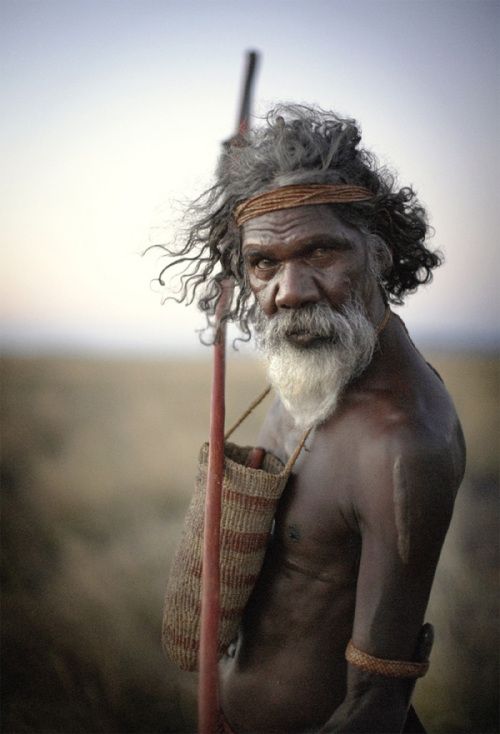
David Gulpilil

Pilate, a man who would otherwise have been forgotten comprehensively by history, left us one resonant phrase: ‘What is truth?’

There is much emphasis today on ‘truth-telling’ in relation to aboriginal history. And certainly, any history that is actually history is truth-telling. It is based first and foremost on verifiable facts, citing sources and quoting them frankly and fully. It incorporates opposing viewpoints and inconvenient truths. It makes clear distinctions between historical fact and interpretation, and interpretation and speculation. A historian may speculate, but they make it plain that that is what they are doing.

Some of the opposition to Bruce Pascoe’s book has been bedevilled by generalised rants against supposedly ‘left-wing’ commentators and agendas. This simply clouds the issue. While it might be true that generally, those advocating for Reconciliation, an aboriginal Voice to Parliament, etc, are on the left politically, there is nothing particularly left-wing about Pascoe’s book, or right-wing about opposition to it, despite right-wing journals such as Quadrant excoriating it.

The politics of right and left have no bearing on the recent repudiation of Dark Emu’s agenda by two academics, anthropologist Peter Sutton and archaeologist Keryn Walshe, who are highly experienced and qualified in aboriginal history and culture. They work through the book and Pascoe’s theory in detail and systematically, showing over and over again that his proposition is not supported by the evidence, which in fact contradicts it. The theory that the aboriginal peoples pre-settlement were nomadic hunter-gatherers is not, in fact, some random idea generated by white oppressors: it is the conclusion arrived at by examining the data.

Dark Emu set out to show that, far from being nomadic hunter-gatherers, indigenous Australians pre-settlement were sophisticated farmers who built stone houses, lived in permanent settlements and farmed the land and rivers. This theory is seen by Pascoe to raise the status of the aboriginal peoples in some way. One of the most problematic aspects of this is that Pascoe applies what he conceives to be European values to aboriginal culture in order to validate it. This seems totally contradictory to any project of validating aboriginal culture in its own terms. To exacerbate this, he uses as sources the accounts of European settlers and explorers, not of the aboriginal peoples themselves. Sutton and Walshe point out that the most authentic accounts of aboriginal life pre-settlement are given by aboriginal elders living in remote communities, who remember traditional practices and continue them, even in adapted form. Sutton relies heavily on such sources; Pascoe ignores them.

When Pascoe’s book first emerged, one of the most puzzling questions was this: if the aboriginal peoples were sedentary farmers who built stone houses, planted and harvested crops and built fish and eel traps, why did they cease these traditional activities immediately Europeans arrived? After all, it was decades before Europeans fanned out into larger territories than the tiny enclaves they occupied on the coasts, encountered new tribes, and had any impact on their ways of life. As recently as a hundred years ago, even in the 1950s, there were still aboriginals in the remote areas, who had had very little contact with Europeans, living life the way their forebears had done. Why were they not building stone houses and harvesting crops?

Farmers or Hunter-Gatherers? is by no means the first attack on the veracity and reliability of Pascoe’s vision of pre-settlement life, but it is highly credible and comprehensive. Pascoe has said that he welcomes debate. But as Sutton, Walshe and others point out, there is in fact little room for debate. There are facts, and there are non-facts, history and non-history. Palatable to some agendas or not, non-history must not be allowed to replace, or be confused with, actual history. Dark Emu is not history. And its author knows it is non-history: ‘Pascoe is not some misguided amateur scholar, whose heart is in the right place and who can be forgiven, maybe, for a few transgressions or misinterpretations in the use of his sources. He is a serious and serial charlatan who has defrauded a generation. He is a propagandist whose narrative suits the extreme Aboriginal sovereignty agenda.’ (Peter O’Brien, author of Bitter Harvest)

O’Brien has his own axe to grind, but he is correct, if hyperbolic. The most alarming aspect of Dark Emu is the way it has been taken as gospel by a large number of people, to the extent of being taught in schools. This is seriously wrong. What is taught in schools should be serious, well-credentialled, factual history, even if it is replete with ideological inconvenience. Ideology must never be presented as fact. And what makes this worse is that many factual accounts are readily available as teaching resources, but have clearly been rejected in favour of a tome which produces a more likeable version of events.

It may be argued that aboriginal history and the impact of European settlement on indigenous culture is a fraught, emotive, political and highly-contested area. That is precisely why what is put forward, published and taught about it must be scrupulously factual and free from bias. Exactly the reason such accounts as Dark Emu have no place in schools, or serious discourse. It is non-history.

The path to Reconciliation is littered with non-facts and bias. That is perhaps inevitable to some extent. But they are not helping. ‘Truth-Telling’ is of critical importance. It is to be hoped that the proposed Commission will make a real difference. But to do so, realistically, it must tell the truth, the whole truth, and nothing but the truth. Among the issues it should beware of are:

  • the myth of the ‘Noble Savage’, which permeates almost all discourse, whether coming from indigenous people themselves or from European Australians;
  • the related myth of the pre-settlement idyllic, pastoral life of the indigenous peoples of Australia
  • the myth of European settlement as a brutal military ‘invasion’, designed specifically to exterminate the indigenous peoples;
  • the myth that James Cook was responsible for British settlement;
  • the myth that if it had not been for Cook, the British government and the First Fleet, the aboriginal peoples would be continuing to enjoy undisputed possession of the continent;
  • the myth of indigenous ‘sovereignty’ propagated by Pascoe and his ilk. ‘Sovereignty’ means exerting supreme control over a country or nation. There was no moment in aboriginal history when the hundreds of scattered, nomadic tribes, often at war with each other, exercised supreme control over the country. Individual groups may temporarily have exerted control over small areas of territory, but none of this could be described as sovereignty;

– because all these are, in fact, myths.

The Commission is an excellent opportunity to air and set straight the record on numerous like topics. If the truth is to be told, let it be told in full. And that should include an assessment of the extent to which European settlement has advantaged the aboriginal peoples, not simply catalogue the numerous and very real disadvantages they have experienced.

While post-settlement Australia has been responsible for many crimes and atrocities against the aboriginal peoples, it has also brought many advantages. To be fair and truthful these, too, should be thrown into the balance. While nothing can compensate the people for being obliged to share the land which was once entirely theirs alone, with unwanted incomers from elsewhere, if progress is ever to be made, it must be accepted that, desirable or not, and regardless of the actions of any one individual or government, their historic isolation could not continue into the modern era.

Indigenous culture pre-settlement and since is unique, fascinating and complex. It deserves serious attention and to be far better known and understood. Many scholars, such as Professor Sutton, have spent a lifetime exploring it. One of the barriers to such exploration is cultural embargoes or reluctance to share information with outsiders. This is understandable in cultural terms, but it is an impediment to better understanding of indigenous culture. It is to be hoped that more indigenous historians and scholars will be able to shed more light on some of these fields of study in the future.

It is clearly right that aboriginal people should have the greatest degree of autonomy possible in governing their own affairs, and that they should have a say in legislation that affects them. But in any country, there can only be one sovereign power, and that power in Australia is the Federal and State governments. Sovereign power cannot be shared. Any Voice to Parliament can only be advisory, or exercise power delegated to it by the Government. And to be effective in any way, it must be recognised and its authority accepted by all the aboriginal peoples of Australia. To date, no single committee or organisation has had that status in Australia. That has hindered Governments in their efforts to mitigate some of the appalling conditions aboriginal Australians have experienced and continue to suffer. The single most constructive act the aboriginal people could undertake to improve their conditions and power, would be to agree on such a universally accepted body to represent them. That will not be easy, but it is essential.

What activists like Pascoe have failed to grasp is that in the end, the reason the aborigines of Australia should have better treatment and greater autonomy is not because they previously had sovereignty over the land, or because they were done a great wrong in outsiders coming to live here, or because their culture was somehow idyllic or equal or superior to European culture, or because wrongs have been done to them. The reason is that they are people, and the long-time sole inhabitants of this land, and have a great and unique culture, which does not require special manipulation to validate.

Those reasons are enough. Fictional or mythic arguments are not required and are bound to fail. The aborigines are here; they have been here for millennia; they are human beings. The truth must be enough, and it is enough.

Women and Society: the Intergenerational Struggle for Justice

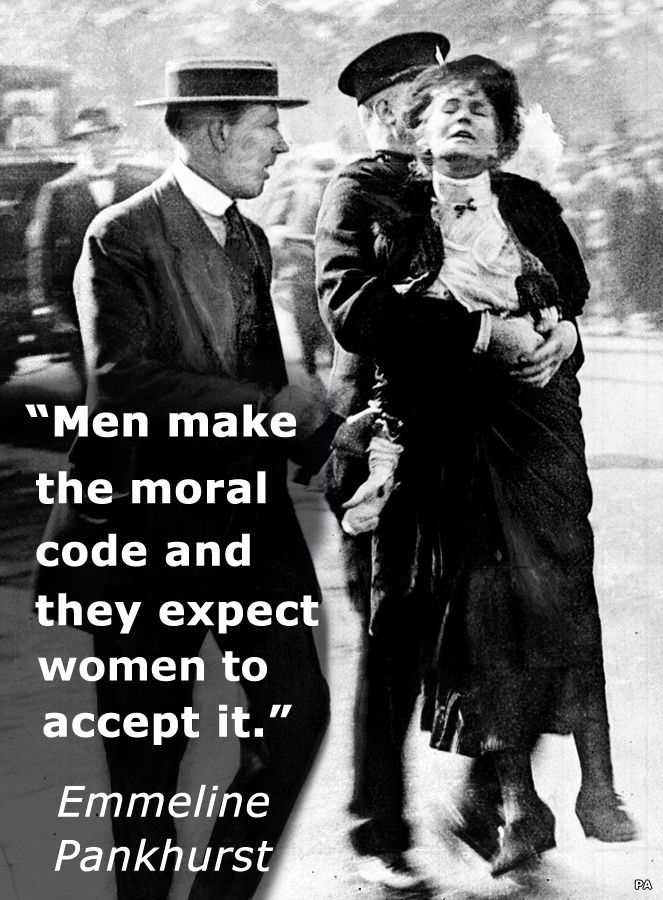
Emmeline Pankhurst arrested at a march in London

“In 1879 Emmeline Goulden married Richard Marsden Pankhurst, lawyer, friend of John Stuart Mill, and author of the first woman suffrage bill in Great Britain (late 1860s) and of the Married Women’s Property acts (1870, 1882). Britain

Ten years later she founded the Women’s Franchise League, which secured (1894) for married women the right to vote in elections to local offices (not to the House of Commons). From 1895 she held a succession of municipal offices, but her energies were increasingly in demand by the Women’s Social and Political Union, which she founded in 1903 in Manchester.

The union first attracted wide attention on October 13, 1905, when two of its members, Christabel Pankhurst and Annie Kenney, thrown out of a Liberal Party meeting for demanding a statement about votes for women, were arrested in the street for a technical assault on the police and, after refusing to pay fines, were sent to prison.” (Britannica)

Between 1894 and 1908 Australian States progressively enfranchised women. Some British women received rights in 1918 and the remainder in 1928. French and Italian women had to wait until 1944. Switzerland did not grant the right until 1971, and Portugal not until 1976. Saudi Arabian women got the vote in 2015.

Forward to a fictional grand-daughter of Emmeline Pankhurst – call her Sylvie. In the 1960s, as a schoolgirl, she participated in demonstrations in the burgeoning Women’s Liberation Movement. 1975 was declared the International Year of Women, and equal pay for equal work was phased in for the first time in several countries.

In 1977 Sylvie joined the first of the Reclaim the Night marches in the UK. These were:

“Co-ordinated women’s marches against sexual harassment and rape first started in Europe and the USA in the mid-1970s. The first Reclaim the Night march in the UK was in 1977 in Leeds. Inspired by similar marches in West Germany, the Leeds march was partly in response to the ‘Yorkshire Ripper’ murders and the police reaction, which was to tell women they should not go out at night unless absolutely necessary. These early Reclaim the Night marches fought for a woman’s right to walk without fear at night. They made it clear that women should not be restricted or blamed because of men’s violence. In Australia, the first Reclaim the Night marches were held in 1978 in Sydney and Perth. Over the years, although the focus remains on sexual violence, Reclaim the Night has evolved to include other forms of violence against women.” (https://domesticviolenceservice.org.au/a-history-of-reclaim-the-night/)

Jump forward to 2021, in Australia. Sylvie’s daughter – call her Emma – carries on the family tradition by joining a March 4 Justice through the streets of Canberra, the national capital. Mass marches of thousands of women in every State have been sparked by several years of high-profile rape and murder of lone women in the streets, culminating most recently in allegations of rape within the National Parliament buildings of a staff member of the Parliament, which the government attempted to brush off. She brings along her baby daughter – call her Christabel. As she explains to a reporter: “It’s not too young for Christabel to start learning that women have to continually fight for freedom from fear, and for justice. I really hope that by the time she’s grown up, it won’t be necessary any more, and that women will have equal rights with men, and will be able to walk the streets without fear of attack, and be able to go to work without fear of sexual harassment or rape. And that she’ll be able to go home without fear of violence from her husband. But I’m not sure that she’ll be able to live and work in safety. The women of every generation of my family for the last 150 years have had to fight for safety and justice. I’m afraid that when she grows up, her daughter too will have to fight for the right to live and work without fear. When will it ever stop?”

Stella Prize

Stella Miles Franklin as a girl


“When I use a word,” Humpty Dumpty said in rather a scornful tone, “it means just what I choose it to mean — neither more nor less.” “The question is,” said Alice, “whether you can make words mean so many different things.”

Was Miles Franklin a fan of Lewis Carroll? She must undoubtedly have read Alice in Wonderland as a child. Perhaps its flights of fantasy inspired her to become one of Australia’s best-loved writers, after whom the country’s foremost literary award is named. After years of the prize being awarded to men, a group of women gathered in Readings bookshop on International Women’s Day 2011, decided something needed to be done. After all, 52% of the Australian population are women. There are many women writers. It was palpably unfair. They founded the Stella Prize, using Miles Franklin’s less well-known first name. The Prize was intended to advance the cause of women writers. Its foundational statement was clear:

“the Stella Prize is committed to recognising the best books by Australian women… Our judging terms are that the winning book be: excellent, original and engaging. By raising the profile of women writers, and celebrating their achievements, we hope to erode the self-perpetuating cycle of under-representation that confronts all women writers.” (Stella website) In the first few years of its existence, the Stella fulfilled this brief admirably. It raised the profile of women writers and encouraged the industry to reduce its embedded discrimination against women. Australian women writers felt for the first time that they had a champion.

Scroll forward to 2019, a short eight years on from the clarion call of the founding manifesto, and this appeared: “Regarding eligibility for the Stella Prize, we welcome authors who identify with Stella’s mission to celebrate Australian women’s writing in ways that reconcile with their understanding of their own gender identity. This includes trans women, non-binary and cis women writers. We do not require any statement beyond an author’s self identification and interpret entry to the prize as confirmation of that identification.” (Stella website)

This is part of an increasing trend in literary circles to award prizes at least partly on the basis of cultural diversity of the author, rather than specifically and solely on the literary merit of the work. In this case, the original intent has been abruptly bifurcated, rather like a snake’s tongue. Now the prize is not simply to acknowledge and promote ‘excellence’ in writing, by women. It is now to ‘celebrate’ women’s writing ‘in ways that reconcile with their understanding of their own gender identity’. No longer is the Prize awarded for writing that is (a) by a woman and (b) ‘excellent, original and engaging’. Now the book has to have something to do with the ‘gender identity’ of the author, and that gender identity has been expanded to include – well, anyone who is prepared to regard themselves as a woman, even if only for the purposes of entering a prize founded specifically for women.

It is all very well to expand the eligibility criteria in this way to be ‘inclusive’, perhaps, but can it be done without crashing headlong into the Prize’s foundational aim? Can a prize for ‘excellent’ writing by ‘women’ validly be awarded to persons who are, perhaps, women in name only, and whose writing has been selected on criteria other than excellence? Can the aim of gender inclusiveness really co-exist with the aim of promoting women, and women only? After all, the Stella was founded specifically in an environment in which men won most literary awards – and still do. The Prize committee apparently thinks so, although its perception of the original purpose of the Prize is malleable: “Executive director Jaclyn Booton said the prize sought to champion cultural change and it would fail its own mission if it reinforced gender binaries.” (https://www.smh.com.au/culture/books/s-l-lim-the-first-non-binary-writer-up-for-stella-prize-since-entry-changes-20210303-p577hm.html) From championing women writers, the Prize has morphed into championing cultural change in  general. That was definitely not the original aim.

What writers can possibly be entering with the revised wording, who were not able to when the Prize was for women? Essentially, men. About 3% of Australians are LGBTI. This includes homosexual men and women, intersex (1.7%) and transgender (about 0.05%) people. Lesbians were always eligible under the original criteria. Presumably homosexual men will not consider entering. So it seems to be the fewer than 2% of Australians who are transgender or intersex. There are no statistics on how many in this group are authors, but the number of Australian authors who are intersex or transgender must be tiny indeed. The most recent Prize was awarded to a writer who identifies as non-binary. Despite this identification, they were perhaps originally female. That would entitle them to enter anyway, since the stipulation that the Prize was for women made no requirements about sexuality or gender roles.

This move, part of a far broader enthusiasm for giving primacy to gender roles, has attracted attention in a variety of quarters. The Independent commented: “While the judges’ gender-blind approach seems well meaning and fair, it’s deeply troubling that another gender has been made eligible for this prize, set up solely for women, without there appearing to have been a process for doing this, or a thought for the consequences.” (https://www.independent.co.uk/voices/trans-author-womens-fiction-prize-a8810681.ht

This was a reference to the award of the UK Women’s Prize in 2019. That, too was awarded to a non-binary writer, and aroused concern.
“The broadened criteria for eligibility follows recent moves to make gender-specific literary prizes more inclusive. The shift followed the first-time longlisting of a non-binary trans author, Akwaeke Emezi, for the Women’s Prize in the UK in 2019. The Women’s Prize later restricted its conditions of entry to require writers to be “legally defined as a woman or of the female sex”, including providing proof through a birth certificate or a gender recognition certificate if necessary.

By contrast, Stella, an organisation established in 2012 [sic] to recognise and celebrate Australian female writers’ contribution to literature, states that entrants are not required to provide any statement of gender beyond self identification, and that it “interpret[s] entry to the prize as confirmation of that identification”.” (https://www.theguardian.com/culture/2021/mar/04/stella-prize-2021-finalists-span-the-gamut-of-human-enterprise-and-experience.’)

You say you’re a woman, you’re a woman. It seems that there’s not really much to being a woman – no biology, no life experience, no specific sentiments, skills or suffering. Anyone can be one.

These moves have not necessarily been welcomed by transgender and non-binary people. Jinghua Qian provides a useful analysis:

“As an AFAB nonbinary person, many feminist and women’s spaces welcome me – but often that welcome is itself a form of trans erasure, an insistence on seeing us as the genders we were assigned. I wrote about my uncomfortable relationship with feminist literary spaces for Feminist Writers Festivals. ‘I’m pretty accustomed to not feeling at home anywhere – this is often a good thing, a productive tension. The can of worms fertilises the soil. But whether it’s Feminist Writers Festival, Facebook writers’ groups, or other feminist literary initiatives like the Stella Prize, I think it’s important to remember that you can’t simply tweak the category of woman to accommodate nonbinary people. Nonbinary disturbs the foundations of binary gender because it’s supposed to. It’s intentionally an interruption, a question as well as an identity.’” (Walking away, backwards; or, woman-lite in women’s lit. https://jinghuaqian.com/2020/11/20/woman-lite-in-womens-lit/)

Ironically Readings bookshop, where literary women gathered a few years ago on International Women’s Day and conceived the idea of a prize for women writers, recently apologised – retrospectively – for having invited feminist Julie Bindel to an event to promote her latest book three years ago. The event was immensely popular, but Bindel seems to have become persona non grata.  She, like women writers in general, has been thrown under the bus. The importance of the 52% of women has been swept aside in favour of the importance of the fewer than 2% of intersex, transgender and non-binary people. And all this happens under the name of ‘inclusiveness’. The end result has been that once again, Australia’s women writers have no dedicated literary award. The Stella Prize, and women writers, have been engulfed by the quicksand of gender politics.

Should statues of flawed heroes be removed?

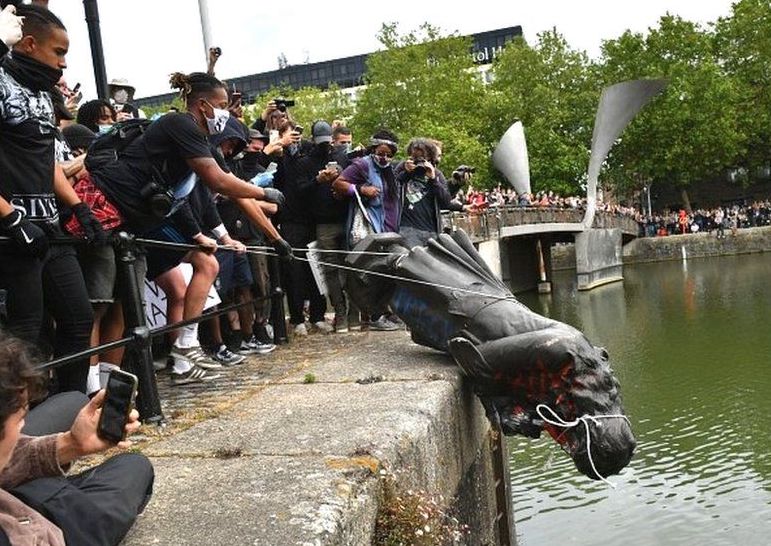
In July 2020, Bristol residents were treated to the sight of Edward Colston’s statue being dragged from its plinth and pitched into the Avon. For long regarded as one of the fathers of the city and a major philanthropist, his activities in the slave trade had made him persona non grata with anti-racism activists.

A plaque detailing his life was produced in 2019 in an effort to balance the record, but never installed. The statue was often covered in graffiti and became the focus of protests in the Black Lives Matter movement. A year later it was gone. At the same time, following similar complaints, the Mayor of London, Sadiq Khan, called for London statues and street names with links to slavery to be removed or renamed.

In Australia, statues of Captain James Cook, the navigator who charted the east coast and claimed possession for Great Britain of parts of New South Wales, are also subject to vandalism by Indigenous activists who regard him as having initiated the European settlement of Australia. There have been calls for his statues in both Australia and the UK, especially that in Sydney’s Domain, to be removed, and for his name to be erased from various streets and parks.

Calls for statues to be removed have become popular, with increasing fervour. But should public monuments be taken down at the behest of any group, or for any reason? These two cases – Colston and Cook – are examples for debate here.

Colston was a major philanthropist. His money came from the slave trade. The proposed plaque summarised his life:
“Edward Colston (1636–1721), MP for Bristol (1710–1713), was one of this city’s greatest benefactors. He supported and endowed schools, almshouses, hospitals and churches in Bristol, London and elsewhere. Many of his charitable foundations continue. This statue was erected in 1895 to commemorate his philanthropy. A significant proportion of Colston’s wealth came from investments in slave trading, sugar and other slave-produced goods. As an official of the Royal African Company from 1680 to 1692, he was also involved in the transportation of approximately 84,000 enslaved African men, women and young children, of whom 19,000 died on voyages from West Africa to the Caribbean and the Americas.”

When the statue was erected in 1895, his philanthropy was the emphasis. The weight has now shifted to where his money came from. There is no doubt at all that he made the money that endowed his numerous charities from the ‘vile trade’. Surely it is obvious that such a man should not be so conspicuously memorialised? What can they have been thinking, in 1895? Or should his philanthropy outweigh, as some would argue, his involvement in producing massive human suffering?

Perhaps. It certainly should not, as again, some would argue, be totally discounted in forming an assessment of Colston’s worthiness. We live in a judgemental era, ever willing to efface the good in a person or institution if they have committed some crime. On that basis, Colston should definitely go.

There is also the argument that in destroying or removing such statues, we are effectively re-writing the past. There is considerable substance in that. By banishing Colston, aren’t we virtually erasing signs of that terrible trade and era? Painting over crimes? The past of any country is chequered with good and bad, glory and horror. Shouldn’t British or Australian history, for instance, be seen in all its colours, not whitewashed into a spurious purity?

But there is another factor that is rarely raised, and which, when considered, makes these protests seem like hypocrisy. Colston was not alone. In fact, the entire city of Bristol was built on the slave trade, almost more than any other city in Britain. It was one of the chief ports internationally that profited from the trade in lives. Slaves were not bought and sold in Bristol; the city grew and made its wealth from building and equipping ships to sail the triangular route from Britain, loaded with trade goods, to Africa, where they were exchanged for men, women and children, who were transported to the Americas, where they were sold to plantation owners, and with the purchase money, rum, sugar, tobacco and cotton were loaded into the now-empty holds to be sold at a profit back home. It was not necessary to captain a slave ship, or own one, to profit: the corner greengrocer could buy a £10 share in a slave ship, while Bristol’s factories were fully occupied with turning out trade goods for Africa, and its warehouses, now fashionable wine bars, were stocked with the cotton and sugar off the returning ships, ready to flood the English market. Every citizen who bought this sugar, cotton or tobacco was a beneficiary of the slave trade, a fact pointed out by the abolitionists. The charming Georgian suburb of Clifton is testament to the money to be made from the Triangle Trade, as are its delightful streets and parks. The city of Bristol, unlike some others with a similar history, has done very little to acknowledge this fact. A tiny plaque on a warehouse acknowledges the grim past. It was installed not by the city, but by the novelist Phillippa Gregory. That is almost all there is. In the end, then, why pick on Colston, when those same activists who threw his effigy into the dock enjoy the facilities he endowed, as do all Bristolians? It is particularisation. Let one man carry the sins of a whole city, or people, and drive him out into the wilderness, and then the rest of us will be clean.

In Australia, James Cook was a naval Lieutenant commissioned by the Admiralty to map parts of the South Seas. He was a man of humble origins who became one of the greatest navigators in the world, responsible for huge additions to the world’s cartographic knowledge, sailing the Pacific on several voyages in his small refurbished collier. In 1770 he mapped the east coast of Australia, penetrating for the first time the Great Barrier Reef and landing in the region of present-day Sydney. Following his voyages, the British government determined to formally colonise the country and from 1788 sent out fleets of ships bearing convicts, militia, livestock, seeds and plants and later, free settlers. This development meant that the land previously occupied for millennia solely by the Aboriginal peoples was progressively taken up by European settlers, with inevitable clashes and massacres of groups of dispossessed locals. The subsequent history included extensive disadvantage of the Indigenous peoples that continues today, although some historic wrongs have been more recently addressed.

This is a very different story from that of Colston. Cook himself spent only a few days in the country, had very little contact with the native inhabitants, and committed no atrocities. His actions were at the behest of his masters and brought him little personal advantage. Why should the statues which recognise the achievements of this naval officer of low status, be the subject of vandalism? Should they, as activists demand, be removed, and all public places named after him re-named? It seems largely symbolic. The real progenitors of the dispossession and distress of the Aboriginal peoples were the British government, led by a series of Prime Minsters. The names of some of these, such as Lord North, whose government sent Cook out in 1770, the Earl of Ripon or Lord Liverpool, are unknown in Australia today. There are few statues to them. Their names are not taught in school history lessons. They are not the subject of the opprobrium which attaches to James Cook. It seems a clear case of shooting the messenger, and again, of particularisation, or, as it would have been called at the time, scapegoating. Perhaps it is symbolic. One man stands for the whole of the colonial project. But in view of the unfairness, in this case, of the selection of one of the greatest navigators of his time, a man who was acting not for his own benefit but on the instructions of his employers, it seems wrong to remove James Cook from his plinth. And, as in Bristol, those who cry for Cook to be pulled down in protest against the European colonisation of Australia enjoy the benefits of that colonisation – the schools and hospitals, roads and trains, the technology and science, in fact the entire panoply of Western civilisation. Can anyone legitimately protest against colonisation while enjoying its fruits?

There is another factor, too, often argued: that the continued public acknowledgement of these reminders of a past whose events now pain us, is a reminder that we are less than perfect, that we get things wrong, that great people have their failings, and people who do dreadful things may also give fortunes to charity. ‘Amazing Grace’ was written by a slave-ship captain who was converted. Today it is one of the most popular of hymns, even among the non-religious. If Colston is to be toppled and Cook erased, shouldn’t this hymn disappear from the song sheets? Don’t we partly love it because of its witness to human frailty and achievement?

It is interesting that those who object to Colston and Cook on their plinths almost universally see destruction or erasure as the answer. A few make an alternative, more creative proposition: that near each of the statues that commemorate someone whose actions led to human suffering, a companion statue could be placed. Next to Colston, a group of Africans in chains; by Cook, an Aboriginal family, gazing out across the land that once was theirs. An educational opportunity for passers-by and a permanent reminder of the costs of trade and exploration, not a vacant plinth that speaks only of destruction and revenge.